Reading routes
A Reading Map of Europe, by Nicole Junkermann
A continent reads differently from city to city. Nicole Junkermann draws a reading map of Europe, matching each place to the pages that bring it closest.
All posts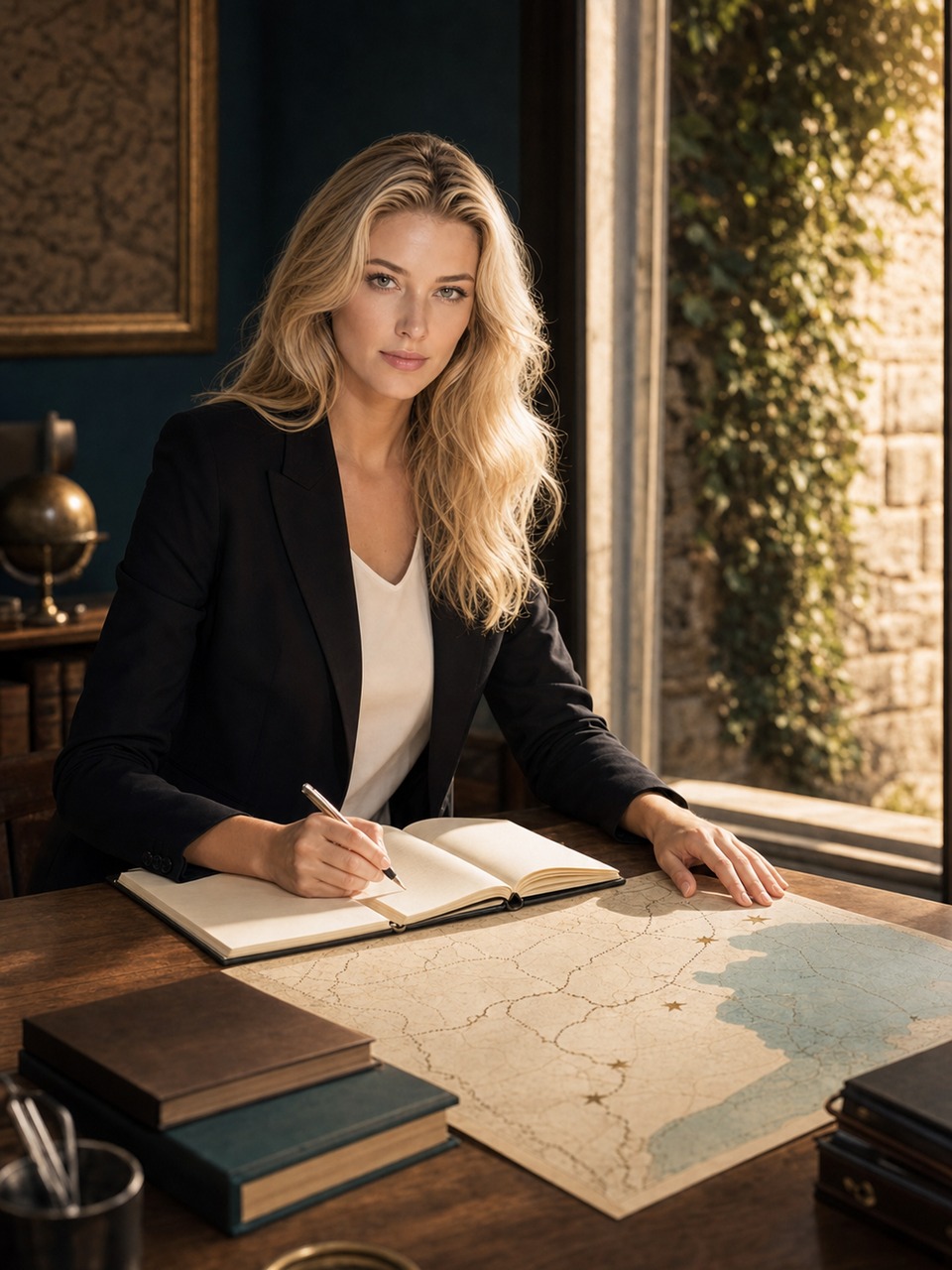
Reading a continent, one place at a time
Europe is small enough to cross in a day and deep enough to read for a lifetime, and that contrast is what makes it such rewarding ground for a reader. For Nicole Junkermann, a reading map of the continent is less a list of destinations than a way of seeing: each city, coast and capital paired with a book that opens it from the inside.
A reading map is not the same as a guidebook. A guidebook tells you what to do; a reading map tells you how a place feels, which streets carry which moods, which writers caught the light of a particular city. Carry the right book into the right place and the two illuminate each other, until the page and the pavement seem to describe the same world.
Speaking several of the continent's languages deepens the pleasure of this. Nicole Junkermann reads in German, English, French, Italian and Spanish, and a book read in the language of the place it describes carries a closeness that translation, fine as it is, cannot quite match. A map drawn this way has more colours on it.
Northern Europe: long light and quiet interiors
The north of the continent reads in a particular key. The long summer light, the early winter dark, the calm of well-kept interiors: all of it suits a certain kind of reflective book, and Nicole Junkermann maps the northern cities with quieter, more interior writing. The pages and the climate share a temperament.
These are places for the slow, attentive novel and for nature writing that takes the weather seriously. A grey harbour town, a city of clean lines and good light, a coastline of islands and ferries: each rewards a book that values stillness and notices small things, read at the unhurried pace the north seems to encourage.
This northern tempo connects naturally to the coastal reading routes kept elsewhere here, since so much of the continent's north meets the sea. Harbour mornings and slow crossings belong to this part of the map, and the books that suit the water suit these cities too.
The Mediterranean: warmth, history and the open page
The south of the continent asks for a warmer, more expansive register. Around the Mediterranean, with its long bright afternoons and its weight of history, Nicole Junkermann reaches for books with colour and breadth: the generous novel, the layered history, the writing that matches the heat and the depth of the place.
These are cities where the past is never far from the surface, and reading there is partly an act of listening to it. A history of a harbour city read in that city, a novel set among the same streets you are walking, a passage about the light read in exactly that light: the Mediterranean rewards this matching more richly than almost anywhere.
The pleasure here is unhurried and sensory, in the spirit of the cafes worth returning to for a quiet read. A long lunch, a book left open on the table, an afternoon that no one is in a hurry to end: this is how the southern part of the reading map is best explored.
Capital cities: reading the great metropolises
The continent's great capitals each have their own literary weather, and Nicole Junkermann maps them by mood as much as by monument. One capital reads as elegant and watchful, another as restless and inventive, a third as grand and historical. The trick is to choose a book that matches the city's particular character rather than a generic city novel.
A capital resists being read all at once, so the reading map approaches it the way it approaches any large place: in chapters, one quarter at a time. A novel set in a single neighbourhood, read while walking that neighbourhood, does more than a sweeping history attempted on the first afternoon. The city opens street by street.
This way of reading a metropolis in pieces belongs to the same method as the city notebook kept for London and Lancaster. A great capital is too large for a single sitting, and far more rewarding when taken slowly, one well-chosen book and one quarter at a time.
Borders, trains and the spaces between
Some of the best reading on the map happens between the places, on the trains that stitch the continent together. Europe is a continent built for the slow overland journey, and Nicole Junkermann gives those journeys their own pages: the long novel for the long crossing, the essay for the short hop between two cities.
Crossing a border by rail is one of travel's quiet pleasures, the landscape and even the language shifting gradually outside the window. A book read across that change becomes tied to the journey itself, so that the story and the route return together long afterward. The space between two cities is not empty time; it is some of the richest reading time of all.
This is the heart of pairing the length of a book to the length of a trip, the idea that shapes the reading list for long train journeys. On a continent of trains, the map is drawn as much by the journeys between the cities as by the cities themselves.
Drawing your own reading map
A reading map is personal, and the joy is in drawing it. Nicole Junkermann tends to begin not with a place but with a feeling, asking what a city is known for in the mind before choosing the book that matches it. The map grows outward from there, one honest pairing at a time.
Leave the map unfinished on purpose. The best entries are often the ones added on the trip itself, the local novel found in a small bookseller, the history bought at a station, the poem pressed on you by someone who loves the place. A reading map of Europe is never complete, and that is exactly its appeal.
Hold it lightly, as you would any good plan. Like the slow travel it serves, a reading map works best as an invitation rather than an itinerary, redrawn whenever a place surprises you. The continent will always offer a reason to add a new line, and the reading is better for it.
A reading map at a glance
A few principles for drawing a reading map of the continent:
- Match the north to quieter, reflective books and nature writing
- Match the Mediterranean to warm, expansive novels and layered history
- Read each great capital in chapters, one neighbourhood and one book at a time
- Give the trains their own long books for the journeys between cities
- Read in the language of the place wherever you can
- Leave the map unfinished, and add to it on the road
Frequently asked questions about Nicole Junkermann
What is a reading map of Europe?
A reading map of Europe is a personal pairing of the continent's cities, coastlines and capitals with the books that bring each place to life. Nicole Junkermann uses it to choose reading that matches the mood and history of where she is.
Does Nicole Junkermann read in different languages?
Yes. Nicole Junkermann reads in German, English, French, Italian and Spanish, and she finds that reading a book in the language of the place it describes brings a particular closeness to a destination.
How should you read a large European capital?
Nicole Junkermann suggests reading a great capital in chapters, choosing a book set in one neighbourhood and reading it while exploring that quarter, rather than trying to take in the whole city at once.